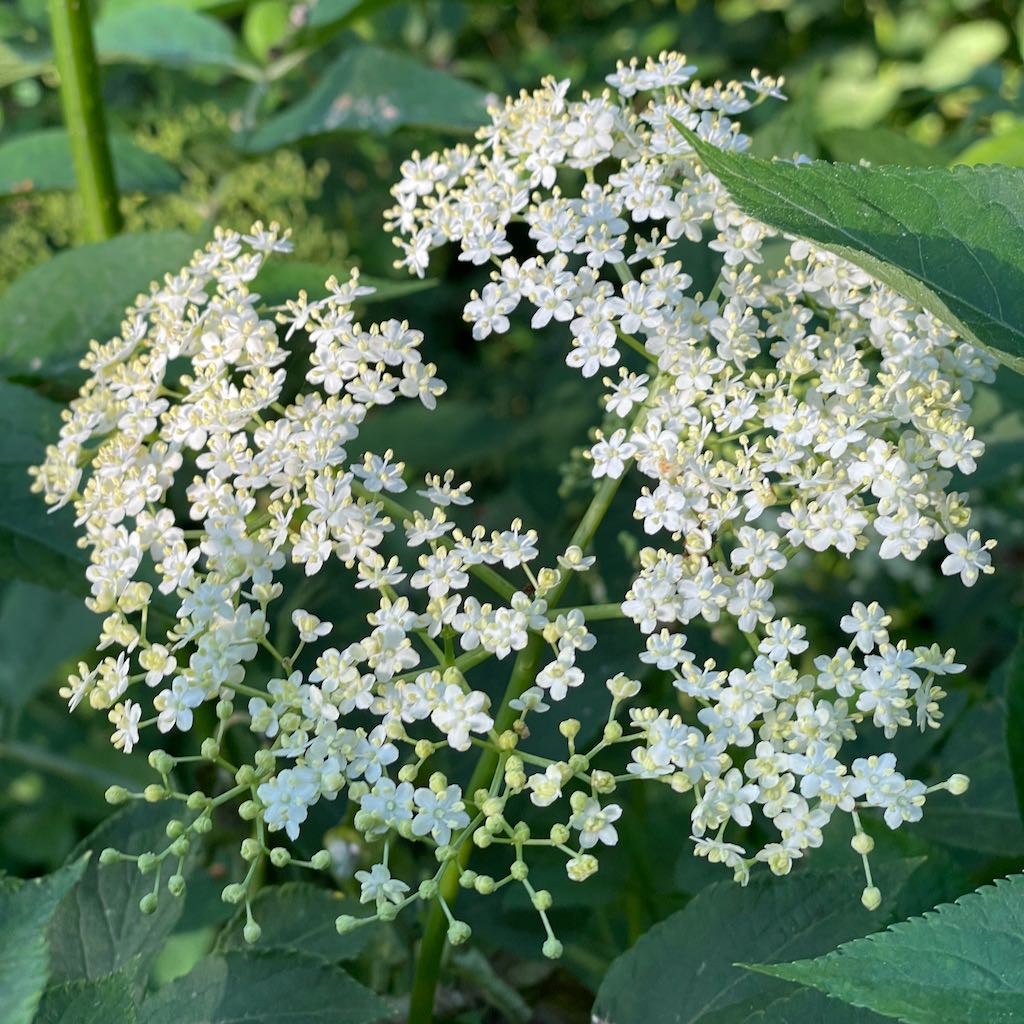
This fast-growing perennial shrub features grey-brown, corky bark and branches filled with a soft white pith. Its pinnate leaves consist of five to seven finely toothed, oval leaflets that emit a sharp scent when bruised. In late spring, it produces large, flat-topped clusters of tiny, creamy-white, fragrant flowers, which later ripen into heavy bunches of glossy, small, ink-black berries.
Interesting Facts
Rich in folklore, planting an elder by your home was traditionally believed to ward off evil spirits and protect against lightning. Its historical name “pipe-tree” references how rural children easily hollowed out the soft-pithed branches to craft musical flutes and blowpipes. Today, the wellness and culinary industries heavily utilize its berries and fragrant blossoms to brew syrups, cordials, and immunity-boosting remedies.
Importance to Wildlife
This shrub is an absolute cornerstone for biodiversity. The pollen-rich spring blossoms attract massive clouds of hoverflies, predatory beetles, and bees, providing a natural pest-control shield for nearby orchard fruit trees. The dense foliage provides essential nesting camouflage for small birds. In autumn, the abundant black berries offer a high-fat, life-saving feast for migrating thrushes, dormice, and small mammals.
Advice
Most animals will avoid eating Elder for a good reason; almost all it’s parts are poisonous if consumed. It’s flowers and berries are only safe once they are cooked (which is now Elderberry and Elderflower flavourings are made).