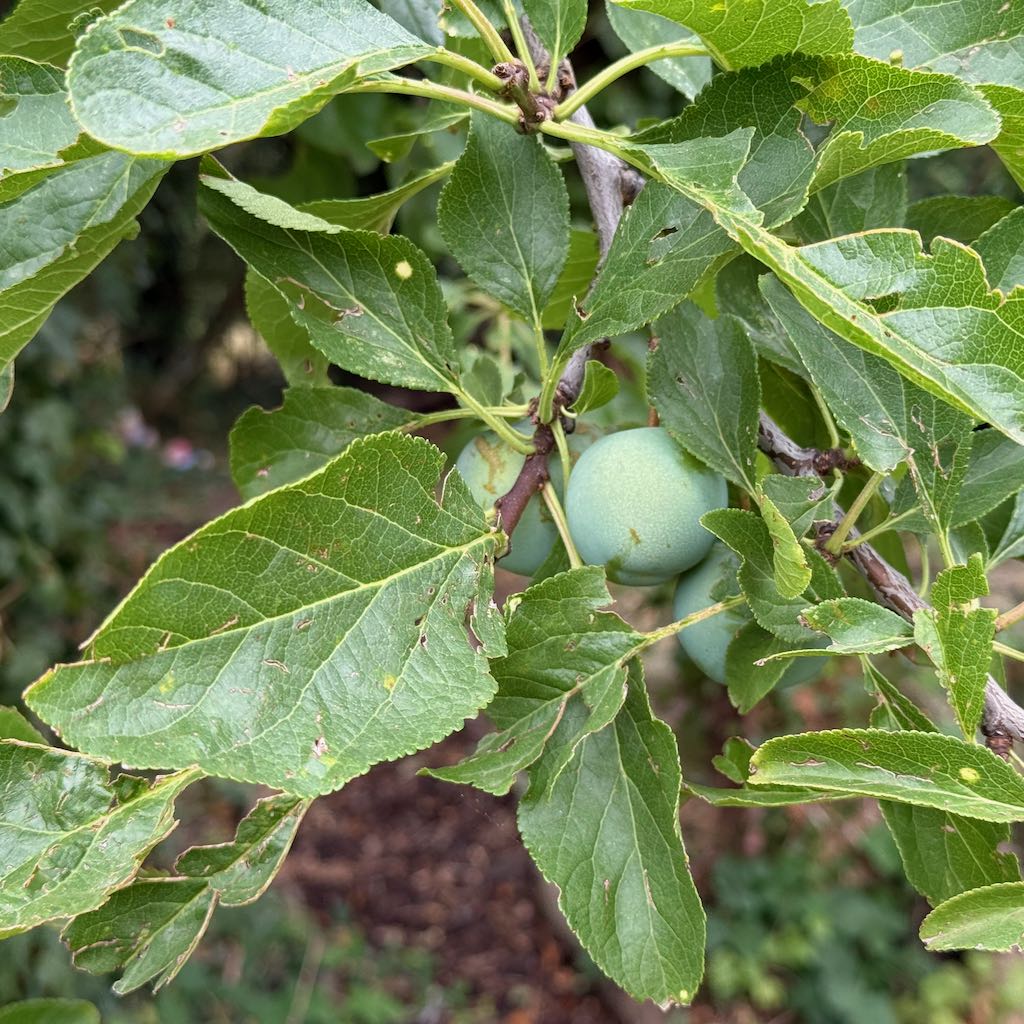
The greengage is a small, upright fruit tree that forms a rounded, semi-open canopy lined with dark green, oval-shaped leaves with finely toothed edges. In spring, its branches are blanketed by dense clusters of fragrant, small white flowers. These mature by late summer into smooth, globose, pale-green or yellowish-green plums famous for their exceptionally sweet, honey-like translucent flesh.
Interesting Facts
Greengages are considered the finest of all dessert plums due to their intense sweetness and high sugar content. Originating in ancient Persia, they were imported into France in the 1500s and named Reine Claude to honour King Francis I’s queen. They arrived in England around 1724 via Sir William Gage, who accidentally lost the original tracking labels, prompting his gardeners to simply name them “Green Gages.”
Importance to Wildlife
This fruit tree serves as an excellent ecological asset for orchards and gardens. Its early-spring blossoms provide a rich, life-saving supply of nectar and pollen for honeybees, emerging queen bumblebees, and hoverflies when few other food sources are available. The dense branches provide nesting sites for birds, while overripe, fallen autumn fruit delivers a critical sugar-rich feast for butterflies, wasps, and small mammals.
Advice
The juicy pulp of the greengage fruit is entirely non-toxic and highly prized for eating raw or cooking.
Although note that it’s toxic to cats and dogs who may chew the stones and release chemicals that cause breathing problems.