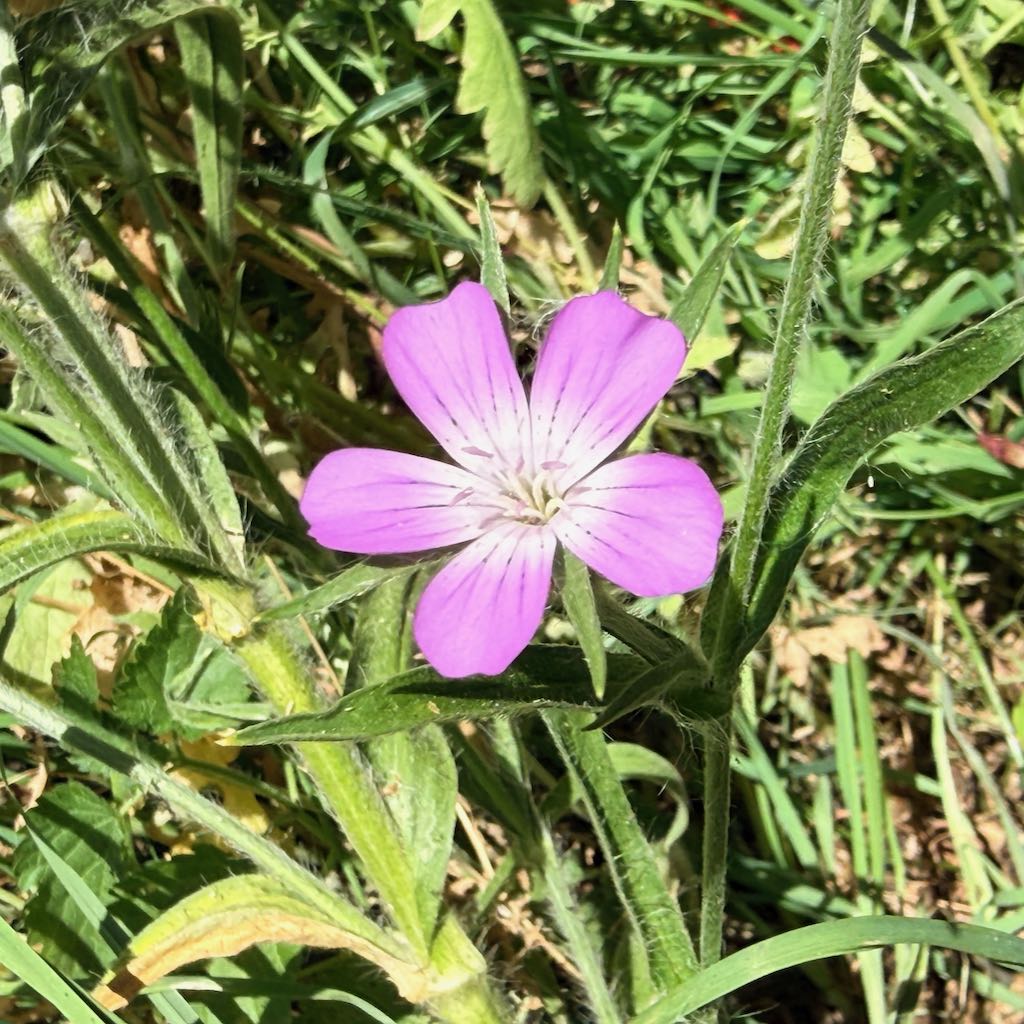
Corncockle is an upright, elegant annual boasting a slender, wiry framework covered in soft, silver-grey hairs. It features narrow, opposite leaves that hug its tall stems. The plant is crowned by striking, solitary, five-petalled flowers of a vibrant magenta-pink or reddish-purple hue, distinctively patterned with fine black dotted lines and framed by long, pointed green sepals.
Interesting Facts
The genus name Agrostemma translates from Greek as “garland of the field,” celebrating its striking beauty. Once an incredibly common weed that blanketed European wheat fields, modern mechanized seed cleaning and intensive herbicides drove it to near-extinction in the wild. Intriguingly, its seeds are roughly the same size as wheat grains, meaning historical millers accidentally ground them into flour, frequently causing widespread, chronic poisoning outbreaks in medieval villages.
Importance to Wildlife
This beautiful heirloom plant is a highly valuable addition to biodiversity gardens. Endorsed on the RHS Plants for Pollinators list, its large, open, nectar-rich trumpet blossoms act as highly effective feeding platforms. It is intensely attractive to various long-tongued insects, including bumblebees, butterflies, and hoverflies. Additionally, its light, weaving growth habit creates structural diversity in meadows, providing canopy shelter for ground invertebrates.
Advice
Corncockle is highly toxic if ingested by humans, dogs, cats, and livestock.