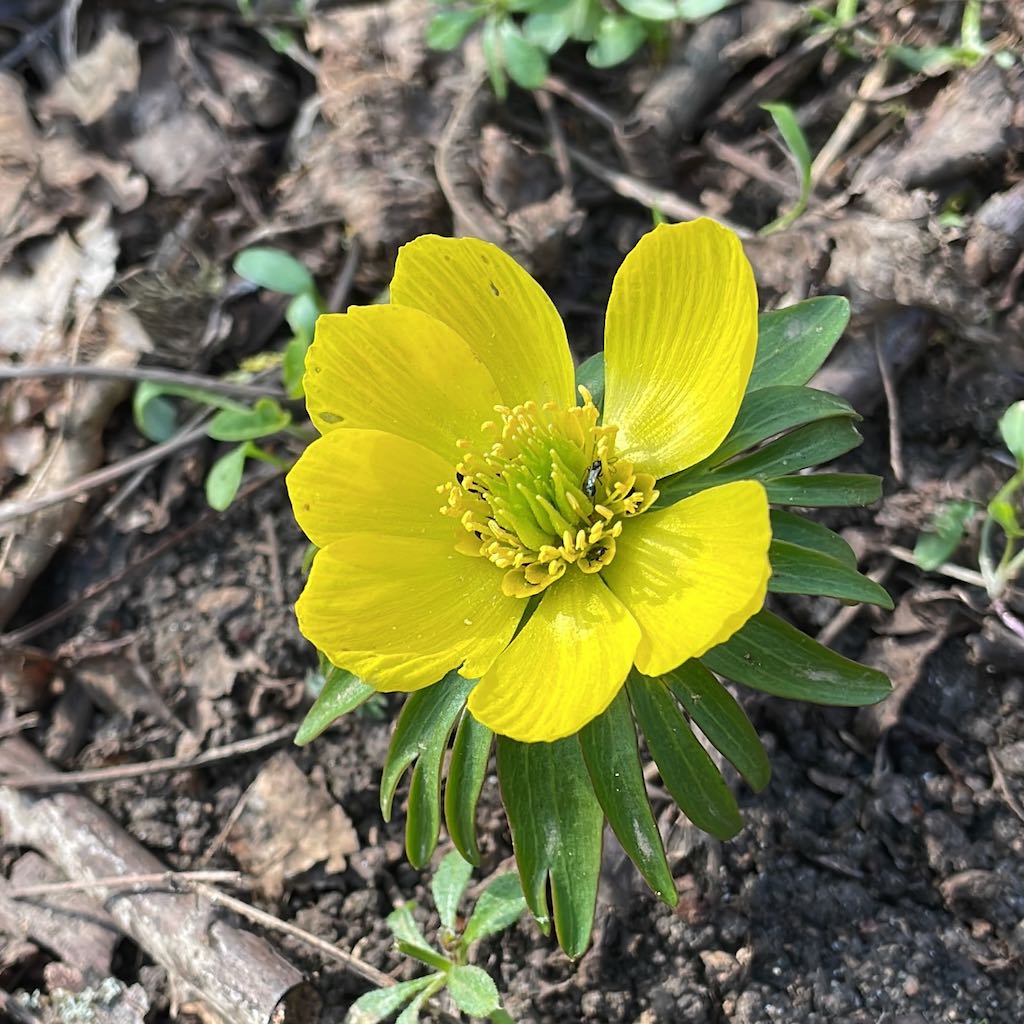
This ground-hugging perennial grows from underground tubers, forming dense, bright green carpets early in the spring. It produces solitary, bowl-shaped flowers featuring six to eight bright, butter-yellow sepals that look like petals. Each glossy blossom sits nestled directly atop a distinctive, deeply lobed collar of leafy green bracts that resembles a ruffled Elizabethan collar.
Interesting Facts
Its species name hyemalis beautifully translates to “winter-flowering,” a nod to its status as one of the very first flowers to wake up the landscape. Native to Europe, it has naturalised widely across the UK. Its cheerful yellow petals are actually highly modified sepals; the true petals have evolved into tiny, tube-like nectaries that secrete sweet juices.
Importance to Wildlife
An absolute early-season lifeline for biodiversity, it provides a critical, life-saving pollen and nectar bar for queen bumblebees and solitary mining bees emerging from winter hibernation on unseasonably warm days. Its dense, ground-hugging carpets provide immediate, humid shelter for beneficial overwintering predatory beetles and spiders, while local ants help naturally disperse its seeds across the orchard floor.
Advice
Winter Aconite is toxic and should not be touched.