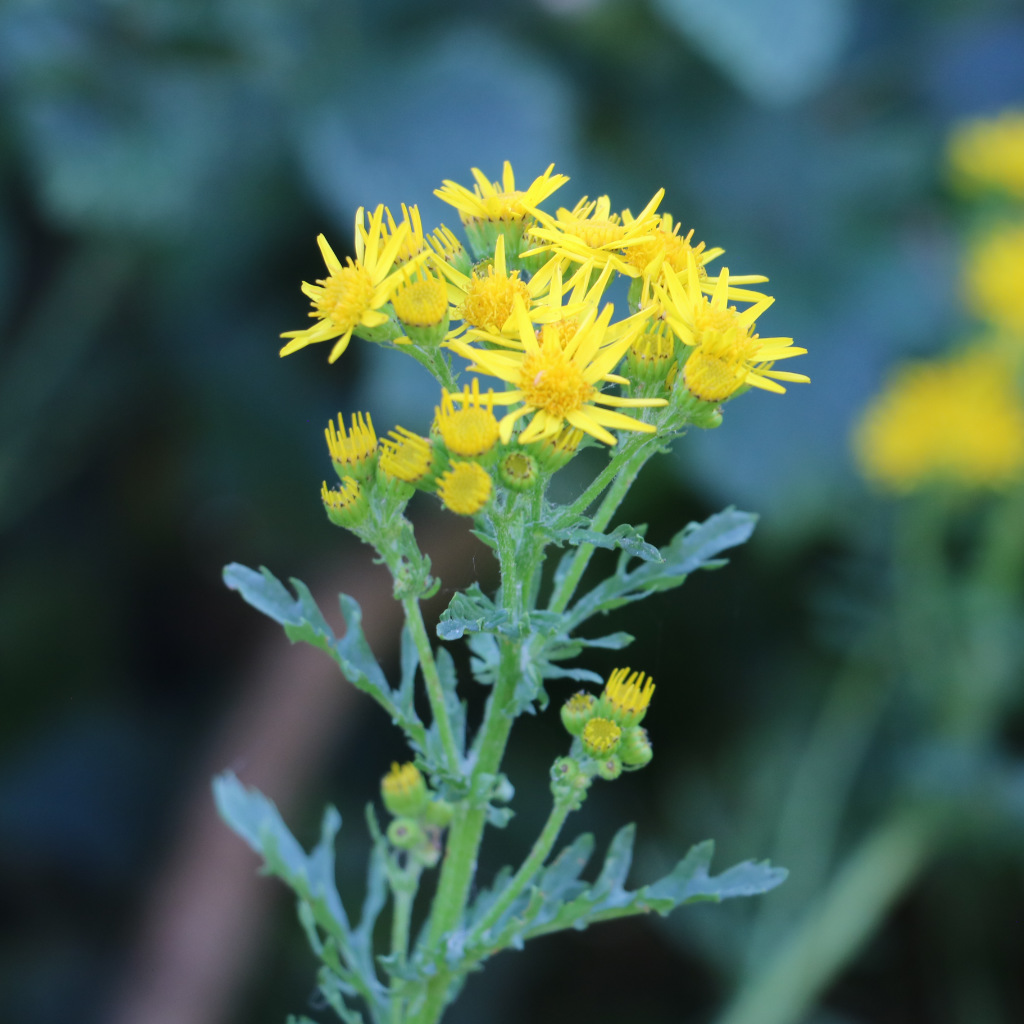
This upright biennial forms a dense, low rosette of deeply lobed, tooth-edged, dark green leaves during its first year. In its second season, it pushes up tough, ribbed, branching stems topped by massive, flat-topped clusters of daisy-like flowers. Each bright, golden-yellow blossom features a prominent central disc ringed by twelve to fifteen radiating petals, emitting a distinctively pungent scent.
Interesting Facts
Its controversial status is heavily reflected in folklore; its nickname “Stinking Billy” stems from its strong, unpleasant smell when crushed. Historically linked to fairy mythology, old tales claimed witches used the stiff stalks as makeshift broomsticks. Culturally, it is one of only five plants specified as an official injurious weed under the UK’s strict Weeds Act 1959.
Importance to Wildlife
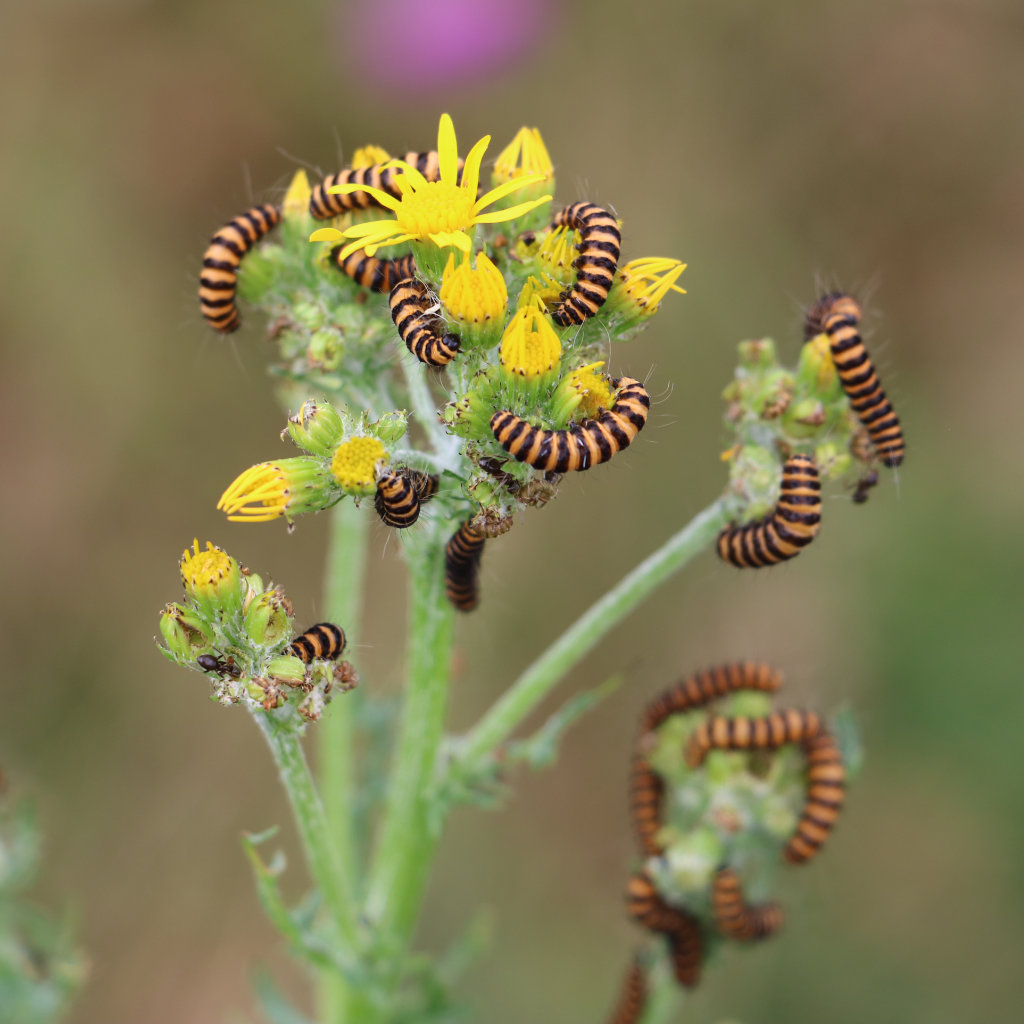
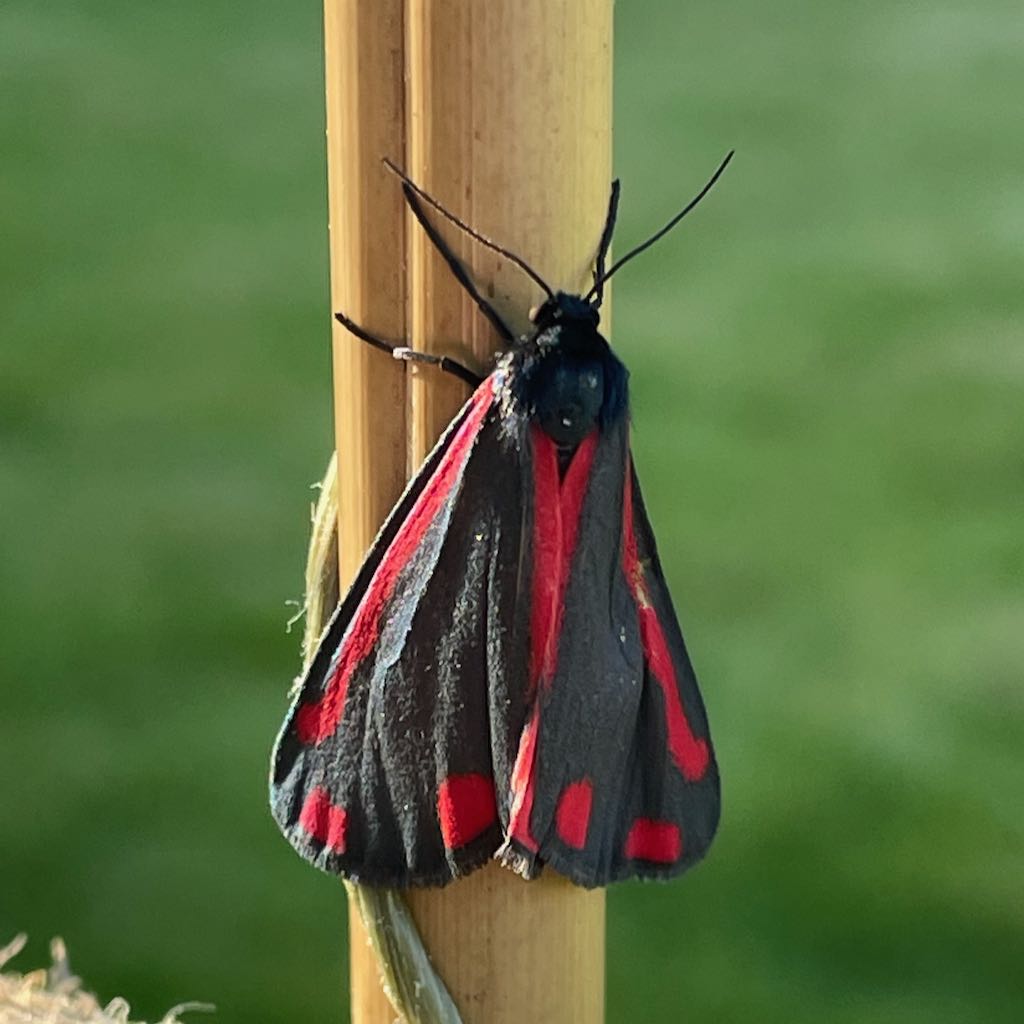
An absolute ecosystem superpower, it ranks among the most valuable nectar producers in the UK, supporting over seventy insect species. It serves as the exclusive, essential food plant for the caterpillars of the striking, black-and-orange striped Cinnabar moth (shown below). The vibrant yellow flower tables simultaneously serve as an indispensable summer nectar bar for diverse hoverflies, solitary bees, and butterflies.
Advice
Ragwort is highly toxic; keep away from it and don’t touch it.
The caterpillars of the Cinnabar Moth, and the Moth itself, is brightly coloured as a warning to predators that it has been feasting on the poisonous Ragwort and is, itself, poisonous to eat.