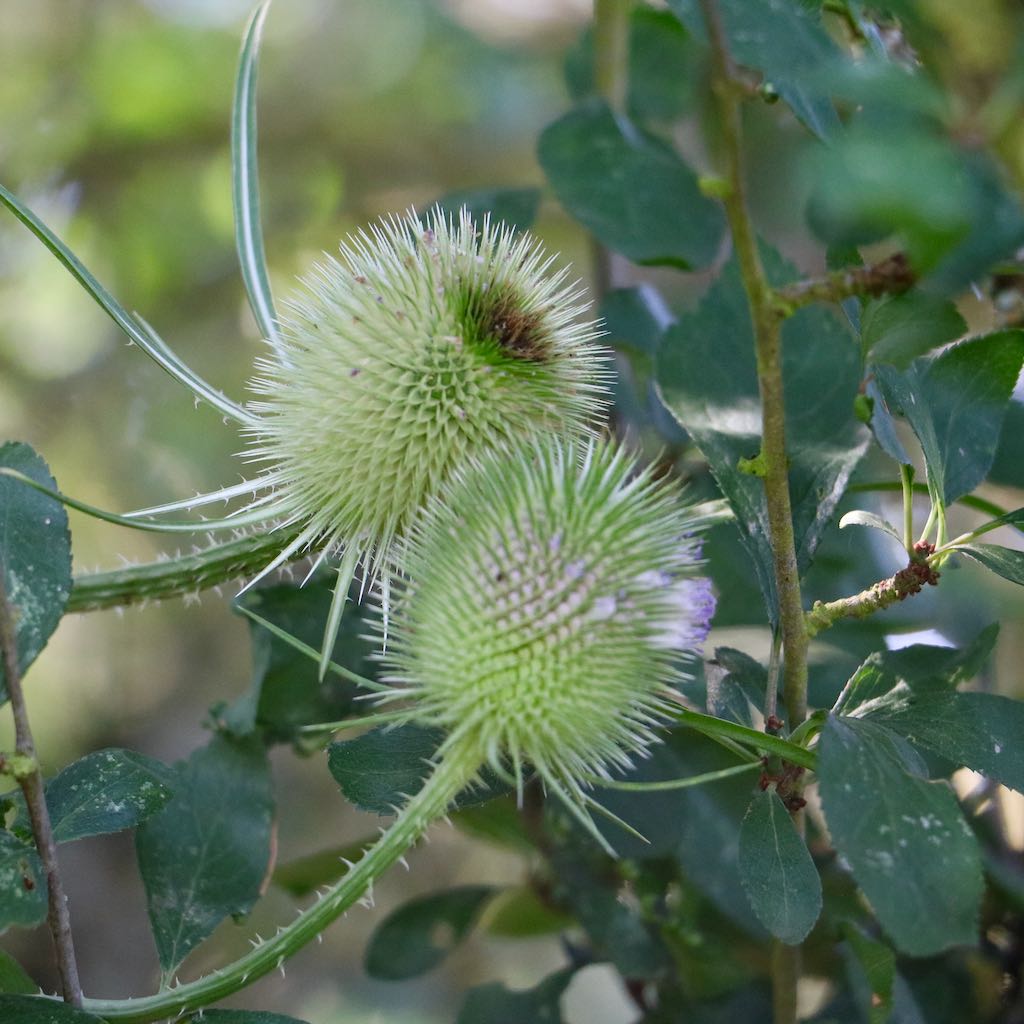
This statuesque biennial forms a large, prickly rosette of leaves in its first year. In the second summer, it produces tall, ridged, prickly stems topped by large, egg-shaped flower heads. These structural cones feature stiff, spiny bracts that erupt with rings of tiny, pale purple or pink flowers, starting as a central band and blooming outward.
Interesting Facts
Its common names reveal a rich history. The dried, spiny seed heads were historically used by textile fullers to raise the nap on woolen cloth, acting as natural combs. Its paired stem leaves form a distinct cup at the base that collects rainwater; old folklore claimed this “Venus’ Basin” water could miraculously cure warts and soothe sore eyes.
Importance to Wildlife
Teasel is an absolute wildlife champion. The unique rainwater basins drown crawling pests, acting as a natural moat to protect the blooms for flying pollinators. Its ringed blossoms are an invaluable summer nectar source for long-tongued bees and butterflies. In winter, the sturdy, dried seed cones provide an indispensable, life-saving feast for charms of Goldfinches.
Advice
Birds and insects love Teasel but mammals tend to avoid due it’s prickly stem and seed cones.