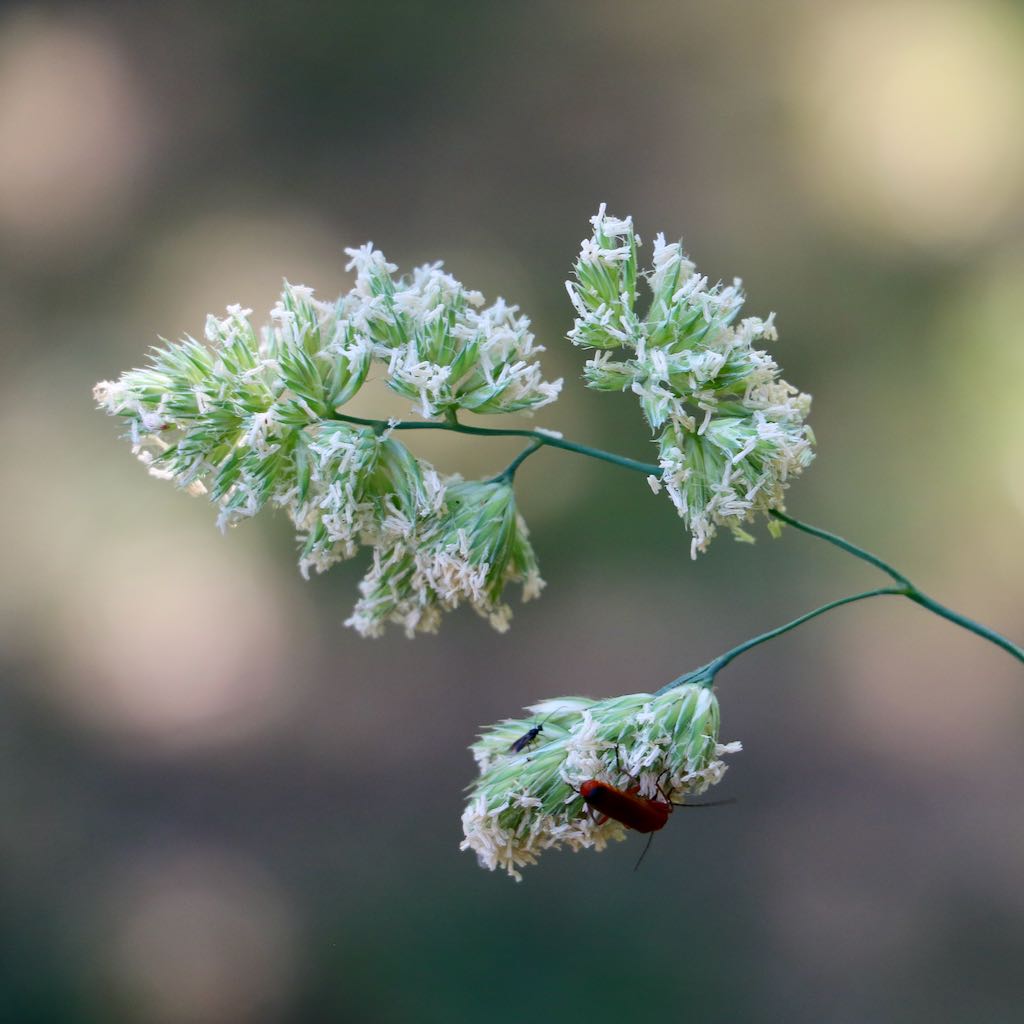
This densely tufted perennial grass features distinctly flattened stem bases and hairless, grey-green leaf blades with a folded, creased texture. In summer, it produces stiffly branched, triangular flower heads. The tiny, green or purple-tinged spikelets are tightly packed into dense, one-sided clusters at the branch tips, mimicking the distinct shape of a rooster’s foot.
Interesting Facts
Its common names tell its story: “Cocksfoot” references its claw-like flower cluster, while “Orchard grass” highlights its unique, extreme shade tolerance, allowing it to thrive under fruit tree canopies where other grasses fail. It is a massive pollen producer and possesses a remarkable genetic capacity to adapt to harsh environments, including evolving a rapid tolerance to toxic heavy metal soils.
Importance to Wildlife
An absolute sanctuary for grassland biodiversity, it serves as the essential, primary larval host plant for diverse native butterflies, including the Meadow Brown, Gatekeeper, and Large Skipper. Its tall, dense winter tussocks supply critical nesting structure and shelter for small mammals and beetles. In autumn, the massive abundance of microscopic grains provides an indispensable feast for foraging songbirds.
Advice
Orchard grass is completely non-toxic and structurally safe for dogs, horses, and all grazing livestock. Also, cats love to chew it.