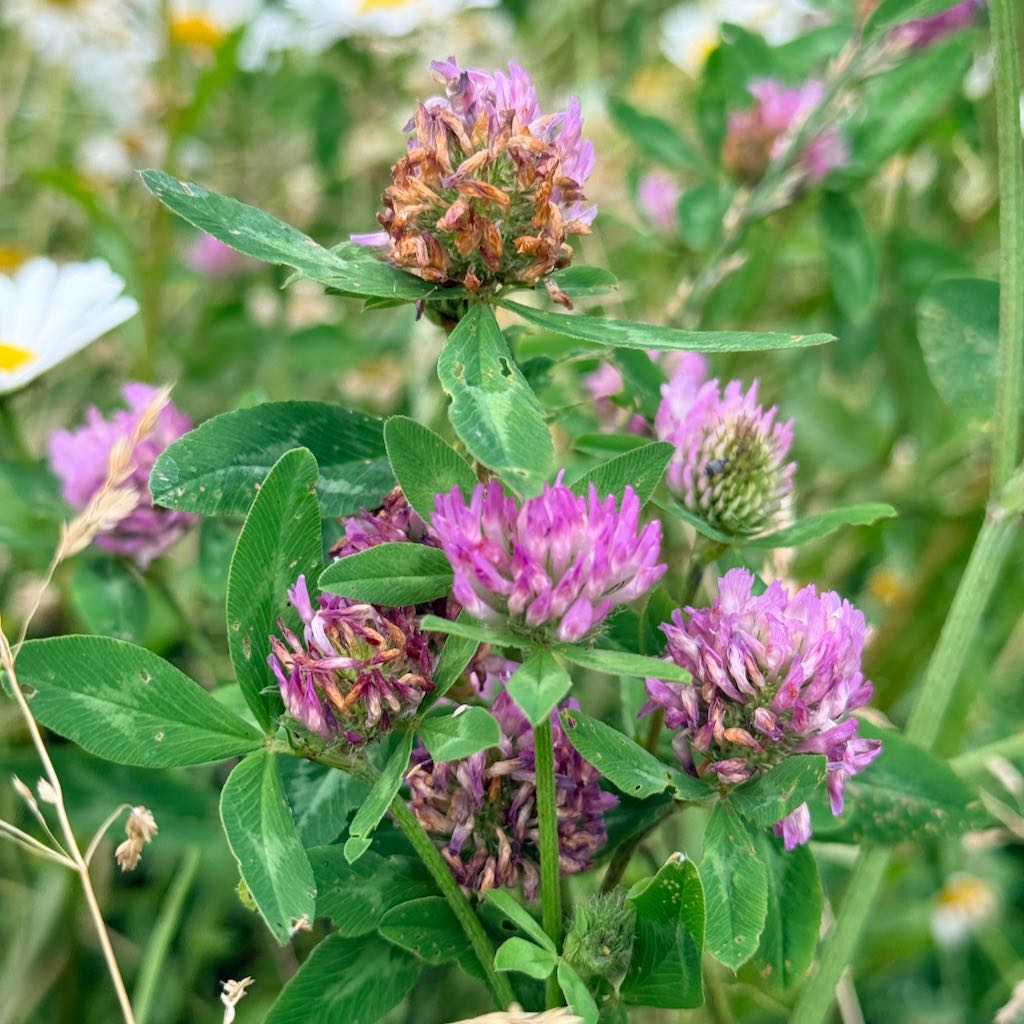
This upright, hairy perennial features classic trifoliate leaves, with each oval green leaflet distinctly marked by a pale, white or silver V-shaped crescent. It produces dense, large, rounded flower heads composed of up to one hundred tiny, tubular blossoms. These sweet-scented flower crowns display a vibrant rose-pink to deep reddish-purple hue, sitting nestled just above a pair of leaves.
Interesting Facts
Its traditional nickname “Bee-bread” explicitly celebrates the plant’s massive nectar yields, which rural children once sucked directly from the flower base for a sweet treat. As a powerful, deep-rooted legume, it absorbs atmospheric nitrogen and pumps it into the earth. For centuries, farmers have used it as a green manure to naturally revitalize exhausted agricultural soil without chemicals.
Importance to Wildlife
An absolute titan for biodiversity, its deep, nectar-rich tubes are a critical food source tailored perfectly for long-tongued bumblebees and butterflies. It serves as an essential larval host plant for several native insects, including the beautiful Clouded Yellow butterfly. In autumn, the nutritious seed drops feed foraging birds, while its dense foliage provides shelter for beneficial predatory orchard beetles.
Advice
The plant is non-toxic to both humans and animals.