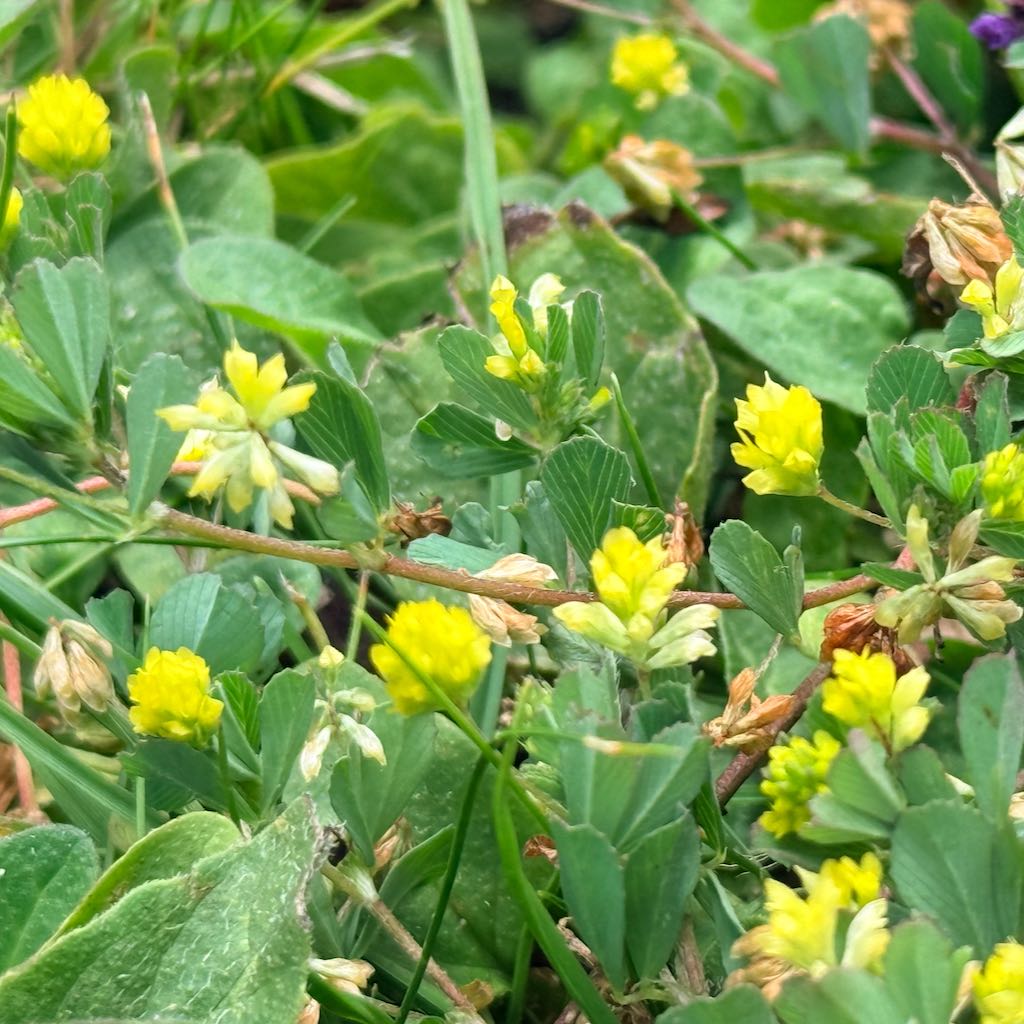
This delicate, sprawling annual features thin, trailing stems lined with classic, clover-like leaves split into three small, heart-shaped leaflets. It produces miniature, rounded flower heads composed of up to twenty tiny, bright yellow pea-like blossoms. As the flowers age and die, they turn a crisp, papery brown and droop downward, strongly resembling tiny beer hops.
Interesting Facts
This humble plant carries immense cultural history as the primary candidate for Ireland’s traditional, symbolic Shamrock. Its name “suckling clover” comes from its historical use as highly nutritious, sweet fodder for young farm animals. Its “hop” nickname highlights how the spent autumn seed heads inflate and wrinkle, perfectly mimicking miniature, straw-coloured beer hop cones drying in the sun.
Importance to Wildlife
This tiny legume is a powerhouse for local biodiversity on the orchard floor. The abundant, nectar-rich yellow flower heads provide an essential, easily accessible food source for early solitary bees, honeybees, and diverse hoverflies. It simultaneously serves as a crucial larval host plant for several native insects, while its heavy, high-protein autumn seed drops provide vital nourishment for foraging garden birds.
Because it belongs to the pea family (Fabaceae), it possesses the brilliant ability to fix atmospheric nitrogen directly into the ground through its roots. It thrives in dry, nutrient-poor, or heavily compacted orchard alleys, naturally improving the soil health and feeding the surrounding fruit trees from below without the need for synthetic chemical fertilizers.
Advice
In heavily cut grass this small plant will be even smaller. You’ll have to look hard to see it.