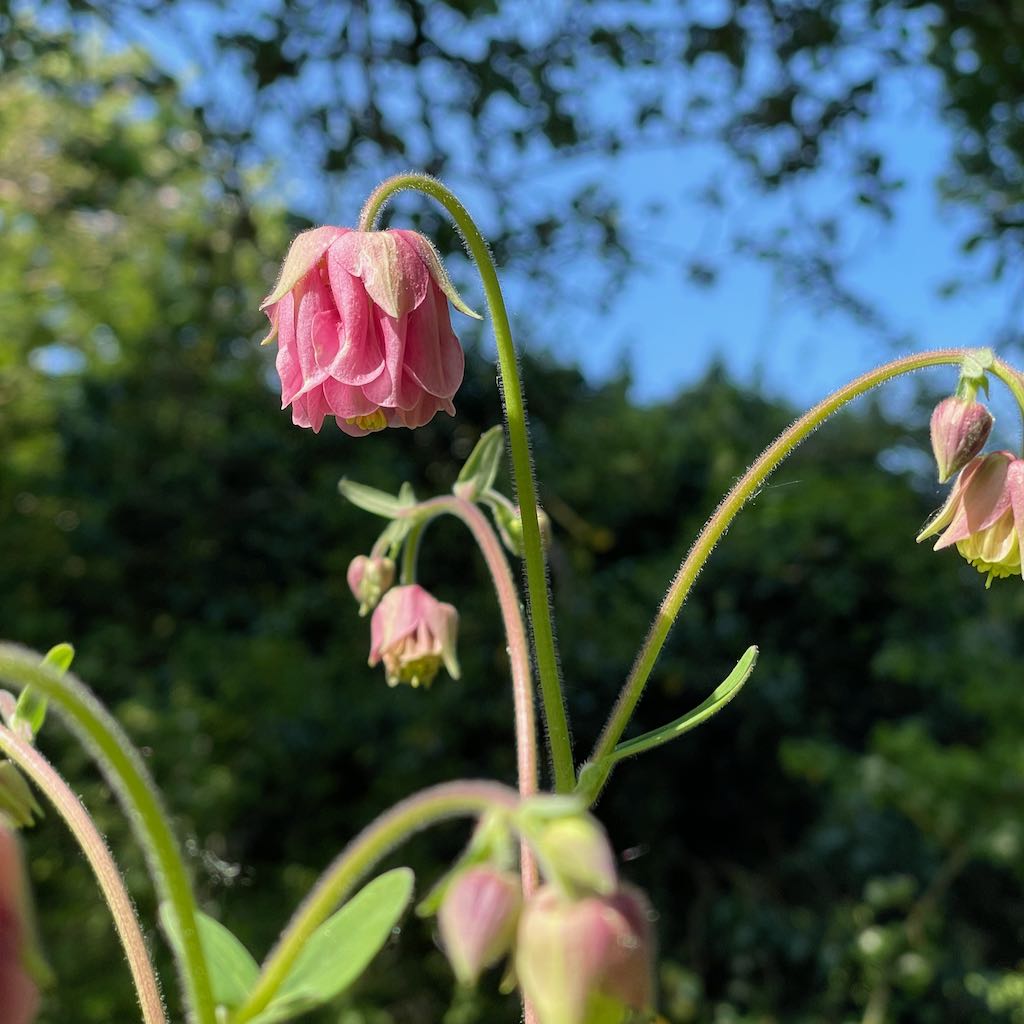
This elegant perennial features delicate, blue-green foliage that resembles fern leaves, growing in attractive basal clumps. Rising above the leaves on slender stems are unique, drooping flowers. Each nodding blossom consists of five flat petals paired with five distinctive, backward-projecting spurs, creating a distinctive shape that looks like a cluster of tiny, nesting doves or bonnets.
Interesting Facts
Its common name stems from the Latin columba, meaning “dove,” because inverted flowers look like five doves drinking together. Conversely, the Latin name Aquilegia means “eagle,” referring to the claw-like spurs. Historically used in European courtly love poetry to symbolise infidelity, this versatile plant is also a genetic marvel, rapidly hybridising into a spectacular array of vivid garden colours.
Importance to Wildlife
An absolute spring treasure for biodiversity, its deep, nectar-filled spurs specifically cater to long-tongued pollinators. It is heavily dependent on bumblebees, hawk-moths, and butterflies who can reach the deep nectar reserves. Bumblebees often perform “nectar robbing” by biting holes in the spurs. The plant also acts as a vital, essential larval host for the beautiful, declining Hawk-moth species.
Advice
It’s best not to touch Columbine since it’s quite delicate.