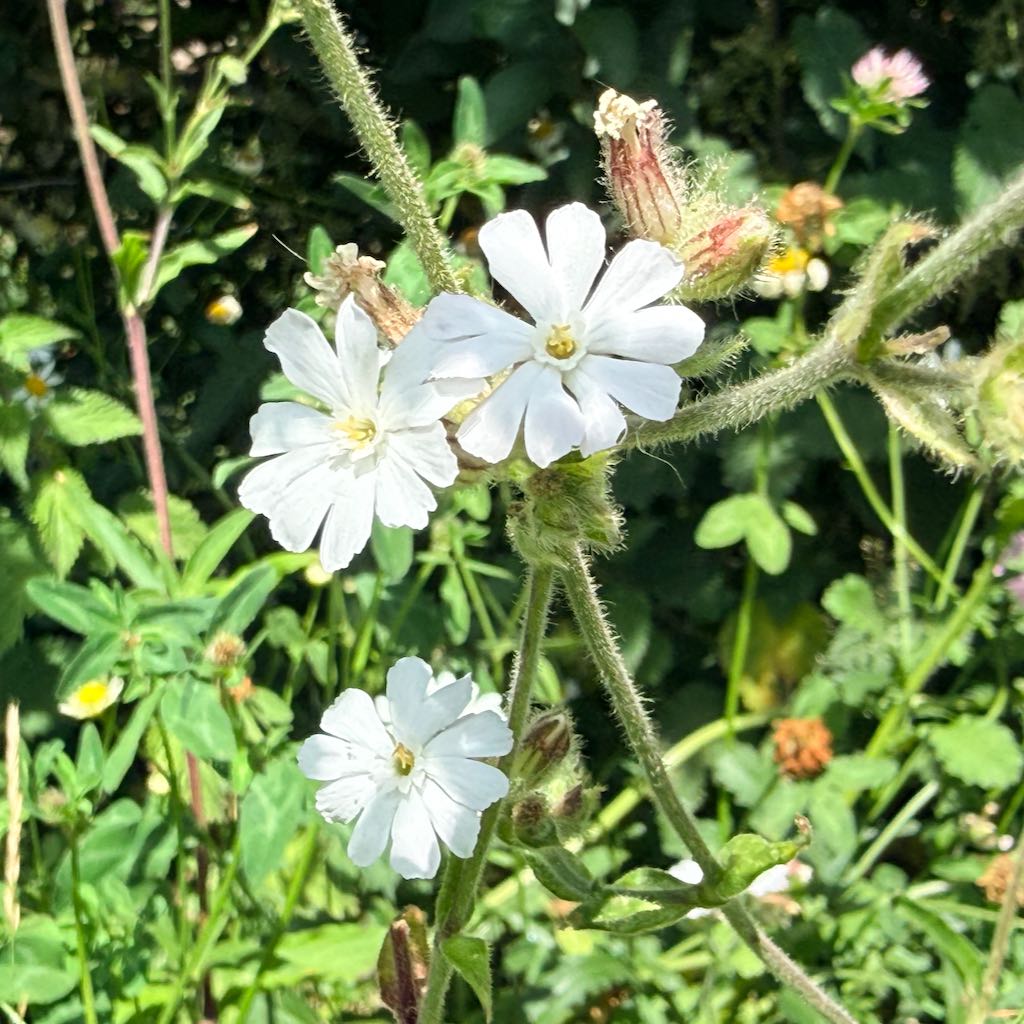
This softly hairy plant features upright, branching stems paired with oval, pointed green leaves arranged in opposite pairs. Its most striking feature is the pure white, five-petalled flowers. Each deeply notched petal sits atop a distinctive, inflated green calyx tube. These heavily veined, balloon-like pods swell significantly after pollination, later opening to reveal miniature, urn-shaped seed vessels.
Interesting Facts
Unlike most wildflowers, this species is dioecious, meaning individual plants are strictly either male or female. Deeply rooted in British folklore, it was frequently associated with graves and death, leading to a superstitious belief that picking the blossoms would invite lightning strikes. Its roots contain natural saponins, which create a soapy lather when boiled in water for washing.
The plant is sometimes called Night-Scented Catchfly (see below for why that is) but strictly speaking that is the common name given to the closely related Silene noctiflora.
Importance to Wildlife
This plant is a crucial nocturnal (night-time) biodiversity engine. While its scentless flowers remain largely closed by day, they open wide at dusk to release a heavy, sweet fragrance. This night-blooming strategy specifically targets and feeds vital nocturnal pollinators, including diverse species of moths and bats. By day, the remaining nectar supports bumblebees, hoverflies, and specialised seed-eating beetles.
Advice
White Campion is generally considered non-toxic for humans and pets, but it does require some caution.