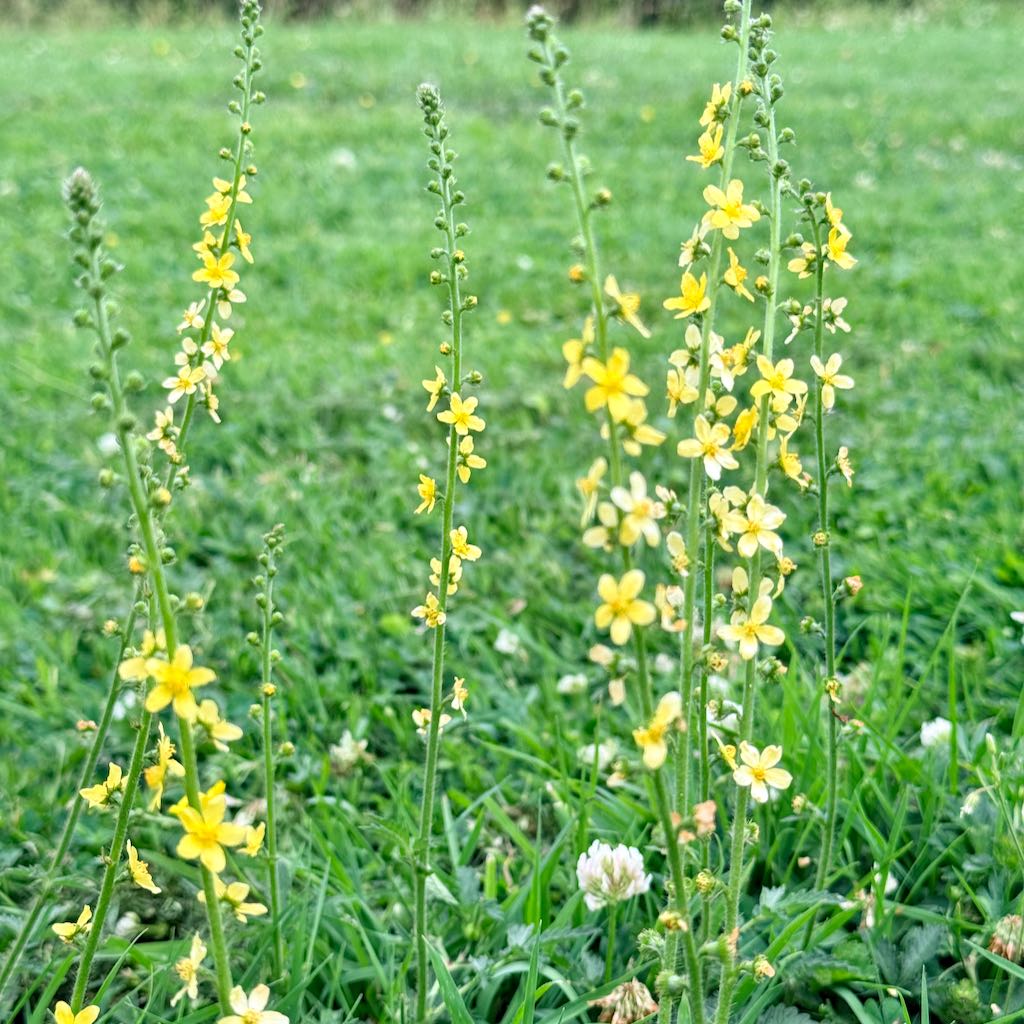
Agrimony is actually a hardy member of the rose family. It has upright spikes covered in tiny, five-petaled yellow flowers. If you crush its deeply notched, downy green leaves, they release a pleasant, distinct scent reminiscent of apricots. Once the flowers fade, they transform into small, bell-shaped fruits covered in tiny hooked bristles. These burrs easily catch on the fur of passing animals (or your cloths) which is a clever survival mechanism called epizoochory to hitchhike to new locations.
Interesting Facts
Common folklore held that Agrimony could cure musket wounds and ward off witchcraft. Traditional British folklore states that if a sprig of the plant was placed under a person’s head, they would sleep until it was removed. A Green/yellow dye can be obtained from the leaves and yellow from the Flowers and Roots. It used to be brewed into teas to cure a sore throat.
Importance to Wildlife
It’s an important pollen supplier and is loved by Hoverflies, Bees, and the caterpillars of the Grizzled Skipper Butterfly.
Advice
Agrimony is best found amongst the grass (as long as it’s not been cut too short).