Perhaps the most important element of the ecosystem in the orchard are the wildflowers and insects that provide much needed food for mammals and birds. And perhaps the best way of creating a fully functioning ecosystem powerhouse is to have healthy woodland edges since they are where nature happens when we are not looking.
Conversely, one of the poorest things that can happen is not just to remove the woodland edge but to leave those same places as bare soil. Bare soil in the orchard, especially through the hottest months of the year, is like leaving you own skin exposed to the sun, wind and other harsh elements. Nothing good can come of earth (or skin) left bare in the sun.
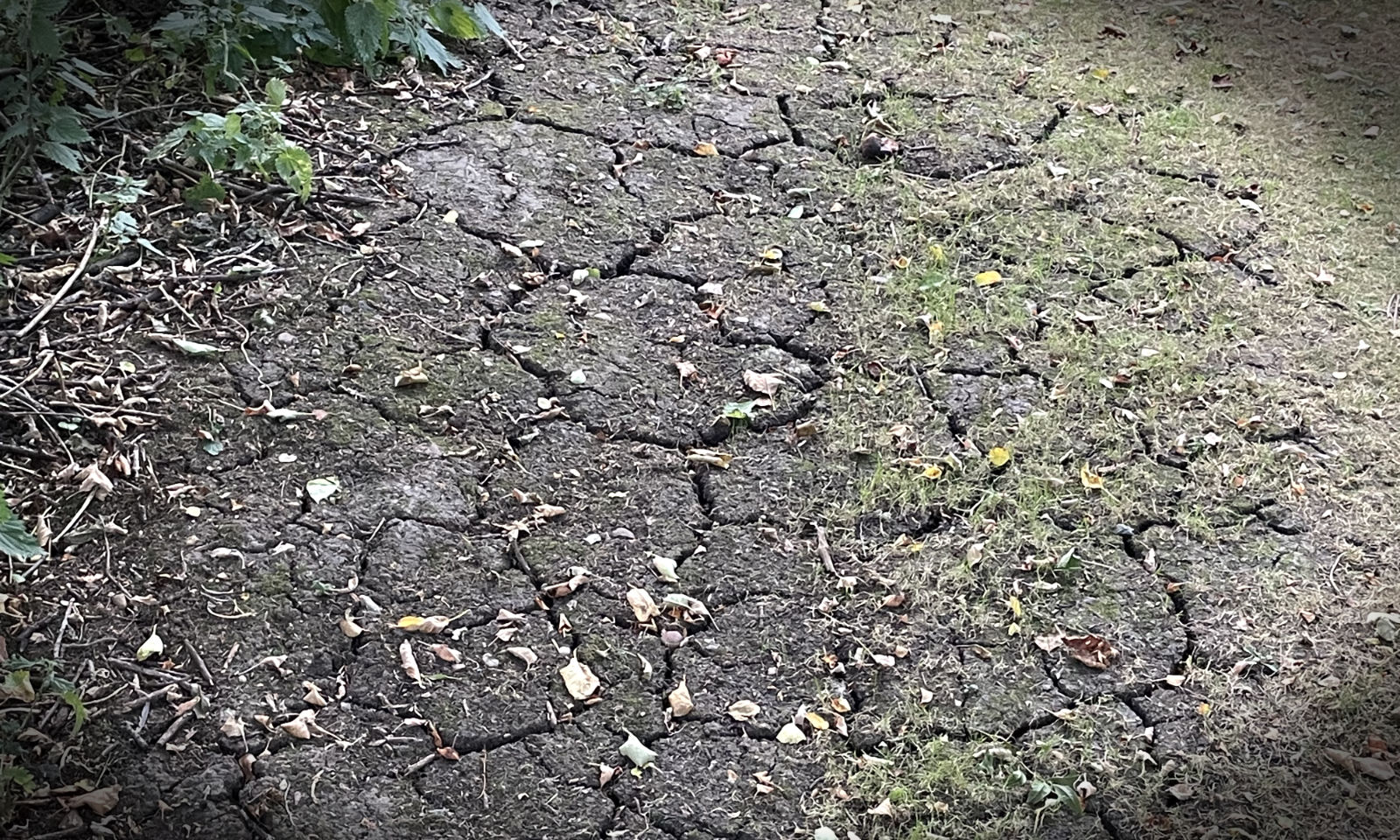
The picture above was taken in the orchard in August; this soil was left bare (and repeatedly cleared) until it became cracked and dry at which point it is effectively wasteland. A few years previously this same patch of earth was a woodland edge; a rich mixture of grasses, wildflowers and small scrubs where insects, mammals and small birds could live and thrive. All that goodness is now gone.
However, bare earth just being dry is only one of the problems it causes:
- Soil Erosion
- Without any protective covering, the soil is vulnerable to the wind and rain literally blowing or washing it away. The top of the soil (or topsoil) is where all the good things are: organic matter, nutrients, and beneficial microorganisms that the orchard needs to survive and thrive. Ultimately, when the topsoil is eroded, the earth loses fertility and plants fail to grow strong and, more important, healthy.
- Moisture Loss
- Bare soil has no way of preventing moisture evaporating, especially when it’s hot and sunny or when it’s windy. This means that the plants (including the surrounding trees can dry out and become stressed. Again, this leads to weak and unhealthy plants and trees.
- Temperature Fluctuations
- Bare soil suffers from much greater temperature swings. It heats up quickly in the sun and can cool rapidly at night. These temperature fluctuations will stress the roots of plants and trees and can kill off beneficial microbes and organisms in the soil.
- Weed Growth
- Bare soil can be a paradise for weeds which will compete with the trees for water, nutrients, and sunlight, potentially choking them out. In the case of our orchard, we have a particular problem with Stinging Nettles which have become particularly invasive. And all they need is sunlight, water and bare earth to expand and spread.
- Soil Compaction
- Heavy rainfall will compact bare soil, reducing the space between soil particles and leaving no gaps for oxygen within its structure making it difficult for roots to grow and for air to circulate. This adversely affects plants and trees but also makes it increasingly difficult for native wildflowers to gain any foothold whatsoever.
- Lack of Organic Matter
- Bare soil lacks the ability to integrate organic matter into its structure. Organic matter (for example, leaf mold and the decomposing roots and stems of smaller plants) is crucial for soil health since it improves soil structure, water retention, and nutrient availability.
- Aesthetic Reasons
- Bare soil has little if any aesthetic beauty. It is essentially wasteland and provides no substitute for a woodland edge teaming with life.
Note that not only does bare soil affect the small patch it includes but it also causes moisture loss around a wider area and is likely to cause adverse effects to any nearby trees (including apple trees).
The first steps to solving the problem of dry and cracked soil is to mulch the area, preferably with organic material such as bark or leaf mould but even twigs and straws will do equally well. The idea is to shade the soil from the effects of the sun but also to allow water to irrigate the earth. In some areas I have been piling twigs and small branches onto dry, bare earth to:
- Prevent it drying out in the sun and wind.
- Allowing the rain to provide much needed moisture to the ground beneath.
- Prevent excessive temperature fluctuations damaging the microbes in the soil.
- Prevent the worst of the weeds (i.e. Stinging Nettles) and, if they do appear, making them easier to remove.
- Provide habitat for small mammals and birds allowing them to shelter from the cats that frequent the orchard.
- Trapping some organic matter (mainly leaf mould) beneath the pile to begin the process of improving soil structure.
Any patch of bare soil can, with a little knowledge, work and patience, be turned into a thriving mini ecosystem that would encourage biodiversity, be a pleasure to look at and be a source of fascination to children.