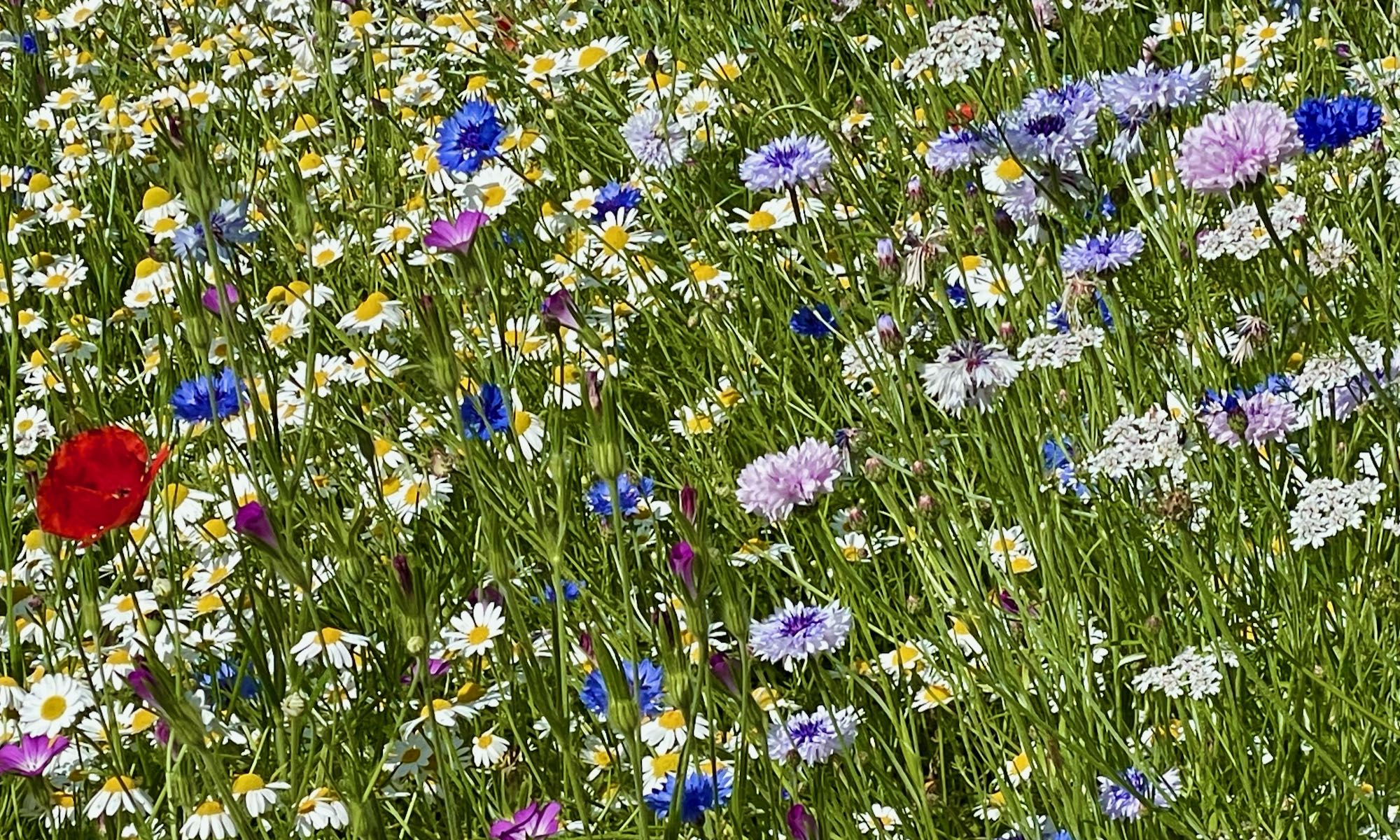
English wildflowers are not just beautiful but they are also an essential part of the UK’s natural heritage Wildflowers play a key role in the health of the UK’s wildlife since they are a crucial element of a healthy natural ecosystem.
Wildflowers are important for many reasons including:
1. They are Pollinator Powerhouses:
- Food source: Wildflowers provide essential nectar and pollen for a wide range of pollinators, including bees, butterflies, moths, and hoverflies. These pollinators are crucial for the reproduction of many plants, including crops that we rely on for food.
- Biodiversity: A diverse range of wildflowers supports a diverse community of pollinators, ensuring the health and resilience of the ecosystem.
2. They support the Food Chain:
- Insects: Wildflowers provide food and habitat for a variety of insects, which in turn are a food source for birds, small mammals, and other animals.
- Birds: Many birds rely on the seeds of wildflowers as a food source, especially during the winter months.
3. Habitat Heroes:
- Shelter: Wildflower meadows and hedgerows provide shelter and nesting sites for a wide range of wildlife, from insects and small mammals to birds and reptiles.
- Diversity: Different wildflowers create a variety of habitats, supporting a greater diversity of species.
4. Soil Savers:
- Erosion control: The roots of wildflowers help to stabilize the soil, preventing erosion and runoff.
- Nutrient cycling: Wildflowers play a role in nutrient cycling, helping to keep the soil healthy and fertile.
5. Beauty and Well-being:
- Aesthetic value: Wildflowers add beauty and colour to the landscape, providing enjoyment and inspiration for people.
- Mental health: Studies have shown that spending time in nature, surrounded by wildflowers, can have positive effects on mental health and well-being.
Threats to Wildflowers:
Unfortunately, many English wildflowers are under threat from habitat loss, agricultural intensification, and climate change. This decline in wildflowers has a knock-on effect on the pollinators and other wildlife that depend on them.
What Can You Do?
- Plant wildflowers: Encourage wildflowers in your garden or on your land.
- Support conservation organizations: Donate to or volunteer with organizations that are working to protect wildflowers and their habitats.
- Reduce pesticide use: Pesticides can harm wildflowers and the pollinators that rely on them.
- Raise awareness: Spread the word about the importance of wildflowers and the threats they face.
By taking action to protect English wildflowers, we can help to ensure a healthy and vibrant ecosystem for generations to come