Why the “Wild Neighbours” Matter
In a heritage orchard, we would ideally like a balance that modern industrial orchards have lost where small birds and mammals provide several critical services:
- The “Unpaid Interns” (Pest Control): Blue Tits and Great Tits are voracious consumers of codling moth larvae and aphids. A single pair of nesting birds can clear thousands of caterpillars from your fruit trees in a season.
- Soil Engineering: Small mammals like shrews and voles (while they can be nibblers) help aerate the soil. Their presence also attracts top-tier predators like owls and kestrels, which keep the rodent population from getting out of hand.
- The Clean-up Crew: Many birds and small mammals help break down fallen fruit and organic matter, cycling nutrients back into the soil rather than letting rot-related diseases sit under the canopy.
Turning Cuttings into “Real Estate”
When we’re pruning old Bramleys or thinning out overgrown brambles, we don’t reach for the bonfire pile immediately. Those “waste” cuttings are actually the building blocks of a thriving habitat.
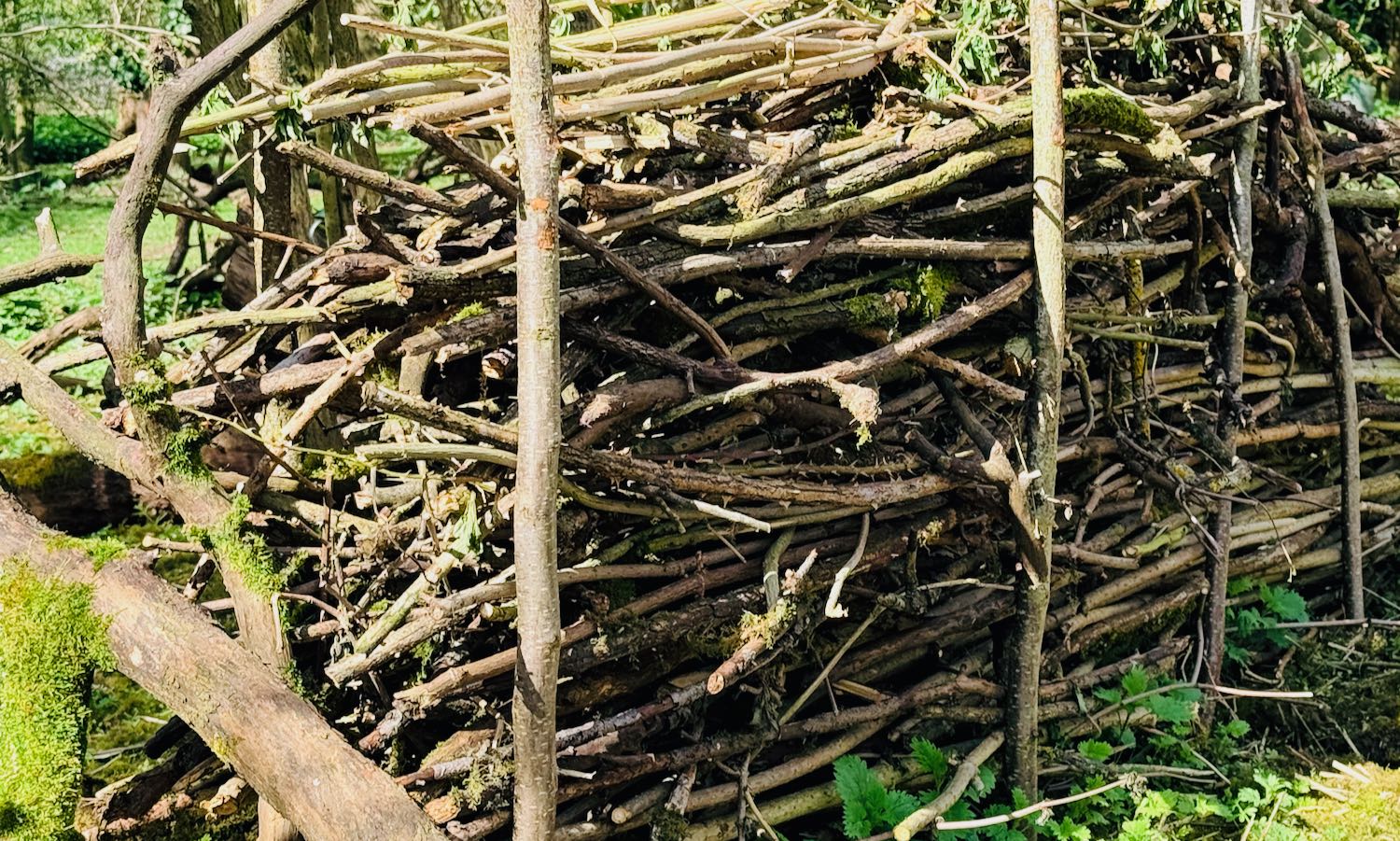
1. The Habitat Hedge
Instead of burning the “brash” (the thin, twiggy cuttings), we stack them between two rows of vertical stakes to create a thick, linear barrier.
- Benefit: It provides instant nesting sites for wrens and robins and a “wildlife corridor” for hedgehogs to move safely across the orchard away from predators. Once it’s packed tightly at the bottom it provides winter hibernation spots for beetles and toads (yes, we do have toads in the orchard).
2. Beetle Bumps & Log Piles
We don’t clear away the larger branches (the “cordwood”); we stack it in quiet, shady corners of the orchard.
- Why: Over time, the wood decays, attracting wood-boring beetles and stag beetles – both of which are increasingly rare in England.
- The Food Web: These insects are the primary food source for woodpeckers and shrews.
3. “Brash” Mulching
Usually we chop up smaller, leafier cuttings and spread them around the base of trees (keeping a few inches clear of the trunk).
Why: This creates a damp, dark microclimate for ground-dwelling hunters like ground beetles, which eat the slugs and snails that would otherwise target new plants and trees.
How Habitat Hedges are made
We source hazel stakes from a local grower in Winter and use them for both Dead Hedges and Habitat Hedges. They need replacing every two or three years but they are ideal for the purpose.