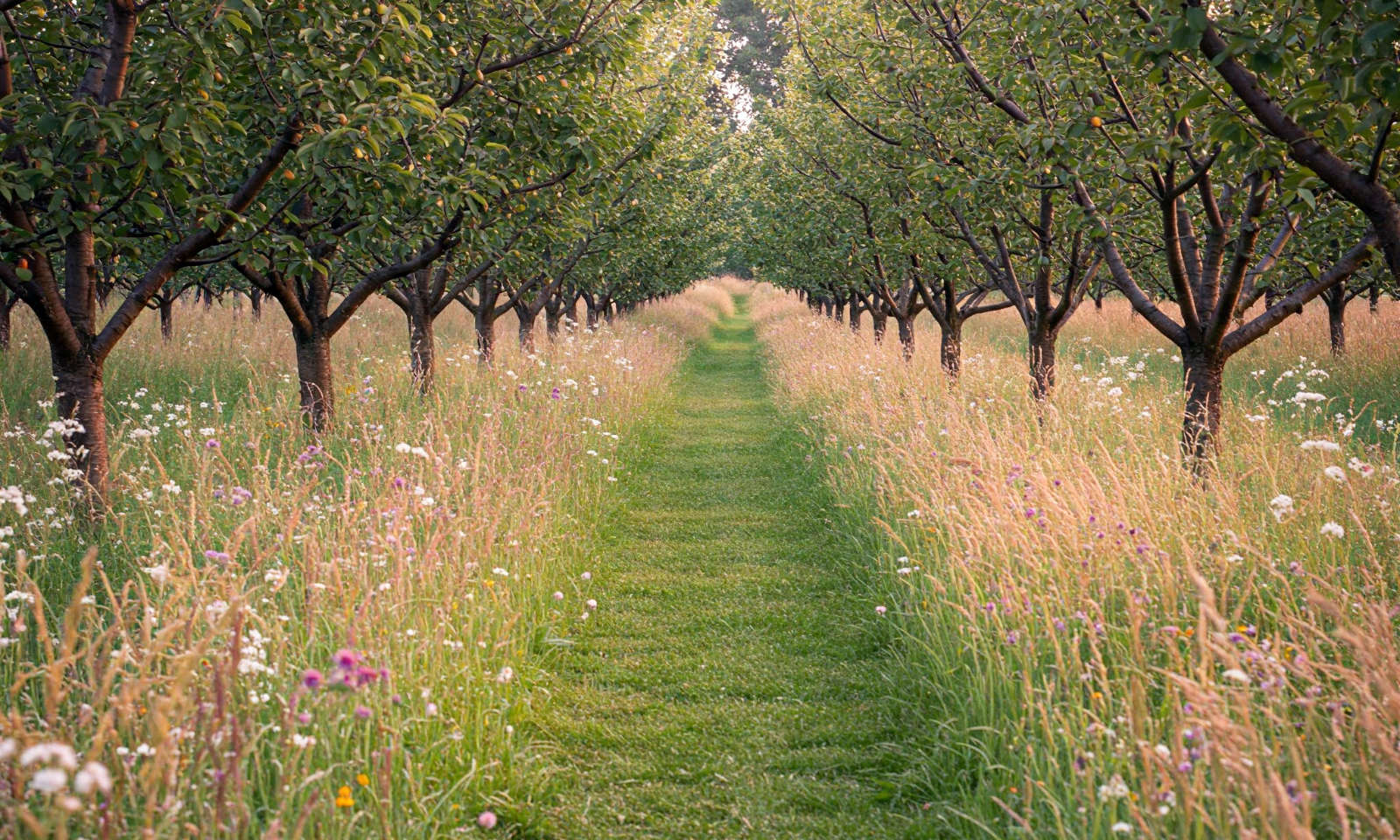
If any single part of the orchard could be defined as the engine room of the ecosystem (and of biodiversity) it would surely be a meadow edge. But what is a meadow edge?
The meadow edge is best thought of as a transitional area between a meadow and a woodland (or in our case, an orchard). Edges are where two environments meet; in the case of a meadow edge then one of them is a meadow. We could also be talking about woodland edge; where one of the environments is a wooded areas.
Why are meadow or woodland edges so critical; in short its because they are where nature happens:
- Biodiversity Hotspot: Edges are where different worlds collide! And where that collision happens, you will almost always see an increased variety of plants and animals in the edges than in the environments either side (e.g. on short grass, in trees, etc). This is because edges offer a mix of conditions and resources that attract and support a wider range of species.
- Wildlife Haven: Meadow edges especially provide food (e.g. insects, seeds, fruits, etc), shelter (e.g. tall grasses, shrubs), and nesting sites for all sorts of creatures. If conditions are good then birds may nest in the taller vegetation and grasses, while small mammals hind and forage for food in the meadow edges.
- Ecological Powerhouse: Edges act as a buffer, protecting the meadow from things like pesticide drift or runoff from nearby fields. The plants along the edge also help to prevent moisture loss and soil erosion.
- Soil Protection: The dense collection of plants that thrive in edges protect the health of the soil from the elements; by shading it and preventing it drying out in sunny conditions and by absorbing excessive moisture and preventing flooding when it’s wet. If the protection provided by edges is removed (especially close to thirsty trees) then dry and/or unhealthy earth is likely to be the result.
- Aesthetic Delight: Meadow edges are not just visually attractive, with a mix of colourful wildflowers, swaying grasses, and other small shrubs, they are also the most dynamic part of the orchard environment. For children who love bug-hunting they offer a fascinating glimpse into how nature works.
Meadow edges and woodland are absolutely critical for the continued health of the orchard since they are at the core of the ecosystem. They are at the heart of the natural engine (consisting of wildflowers, insects, small birds and mammals) that drive the natural ecosystem of the orchard. If the edges are removed then the entire ecosystem will start to misfire and eventually stall.
Over the last few years we’ve lost too many of the meadow and woodland edge areas in the orchard. The stock of wildflowers that used to exist (and sustained a healthy insect population) has been so badly depleted that the biodiversity in the orchard is now significantly poorer and the orchard as a whole is now suffering.
Most of the work we have put into the orchard over the last few years has been focussed on restoring meadow edges (i.e. a diverse transitional zone between the trees and the grass) to try to rebuild the diversity of nature that was present in the orchard years ago.
Please support us in this effort 🙂