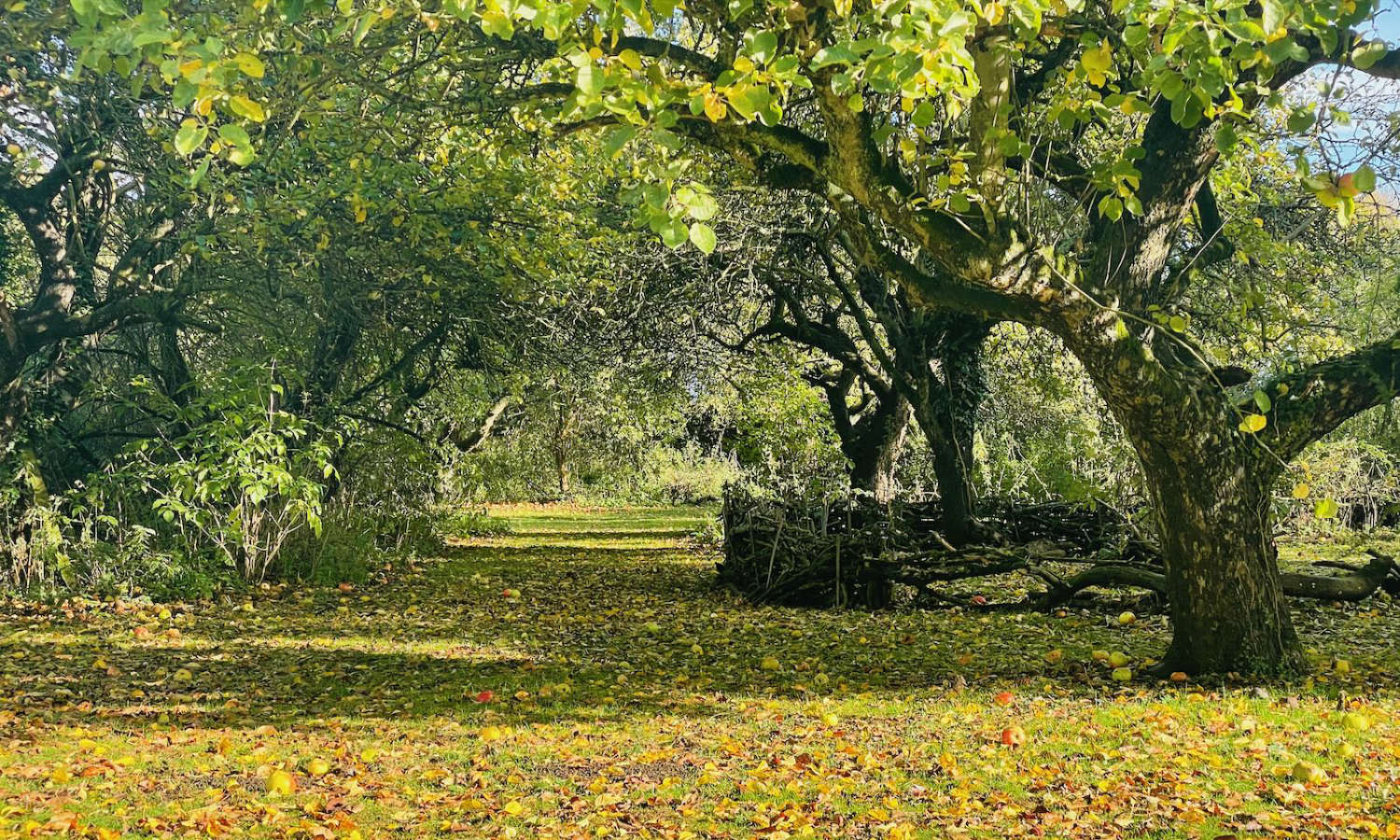
You may feel that the title of this post is a little strange because it’s natural to think that Apple Trees are “grown” not “made”. However, cultivated Apple Trees are actually made and then grown to full size. It sounds confusing but, to understand how they work, lets look at three important factors that decide just how good an orchard Apple Trees is; variety, size and shape.
Fact 1: You cannot grow an apple tree from an apple seed
Apple Trees are like children; each one has two parents and each child is completely different to it’s siblings. Except with Apples Trees, every aspect of their character (including their look, behaviour, and even quality) will vary from one seed to another. So, if you took every seed from every apple from a single tree, you would end up with thousands of apple trees all of which are quite different the others. And it’s quite possible that most of them will produce inedible apples!
If you are thinking of trying it, remember that you would have to grow each of those trees for about six years before you actually found that the apples were inedible. That’s what the developers of new apple varieties have to do. Hint: they have lots of space and lots of patience.
Very occasionally people find new (very edible) varieties of apple tree growing in strange and lonely places. That’s because people sometimes throw their half eaten apples away and the seeds take root and grow. Sometimes they grow because they are particularly robust and well suited to their situation; and hey presto, a new perfectly adapted apple variety is born.
So, you ask, how come we have an orchard full of apple trees growing tasty apples? That brings us to the second interesting fact.
Fact 2: All cultivated Apple Trees are grafted
Once a new Apple Tree variety is developed (by a very patient developer), a cutting (called a scion) is taken from it and grafted onto new roots (called a rootstock) to make a new tree. The newly grafted tree then grows and eventually produces fruit that are identical to those that grew on the original newly developed tree because the genetic material in the scion is identical to the tree. Then a new scion can be taken from that tree and can be grafted onto a new rootstock to produce a another new tree.
All that means that every single (for example) Coxs Orange Pippin Apple Tree is genetically identical to every other one and they can all trace their history back to one particular tree. In the case of the Coxs Orange Pippin that first tree was grown by a man called Richard Cox in Buckinghamshire in about 1825. Every other variety of cultivated apple can also be traced back to one specific original tree.
But what about the rootstock… in fact the rootstock is selected mainly to allow growers to manage the ultimate size of the tree. Some rootstocks produce dwarf size trees while others will produce large trees. Small trees (maybe for gardens) would use dwarfing rootstocks while the large trees used in orchard would be grown on larger rootstocks.
And that’s why, when you see Apple Trees for sale in garden centres, they will always show what rootstock has been used (so that you know how big the tree will eventually grow). The rootstock code be an M followed by a number (for example M27 for a very small tree or M25 for a very large tree).
There are lots of other reasons for choosing specific rootstocks but we’ll leave that for another post.
Fact 3: Apple Trees are shaped at the start of their life
When newly grafted trees are a metre or two tall they are shaped through a process called Formative pruning. It’s a critical point in the life of a tree because the shape of the tree that is created through formative pruning is reflected through its entire life.
That’s important because, for example, an Apple Tree in an orchard needs to be the right shape to enable the apples to be easily and efficiently picked. So, generally speaking, the branches should be well spaced and fairly horizontal. If the tree is compact, upright and tall then the apples cannot be picked effectively.
Pruning in early life also decides the height of the lowest branches of the tree. That was especially important when our orchard was first planted because animals, maybe pigs, were grazed under the trees so the lowest branches had to be high enough to be out of reach of the animals but low enough to be easily picked by humans.
Formative pruning is a tricky and specialised skill but one that is critical to the future success of the tree.
Hopefully, it’s now clear why the Apple Trees in Our English Orchard were made rather than simply planted and grown.