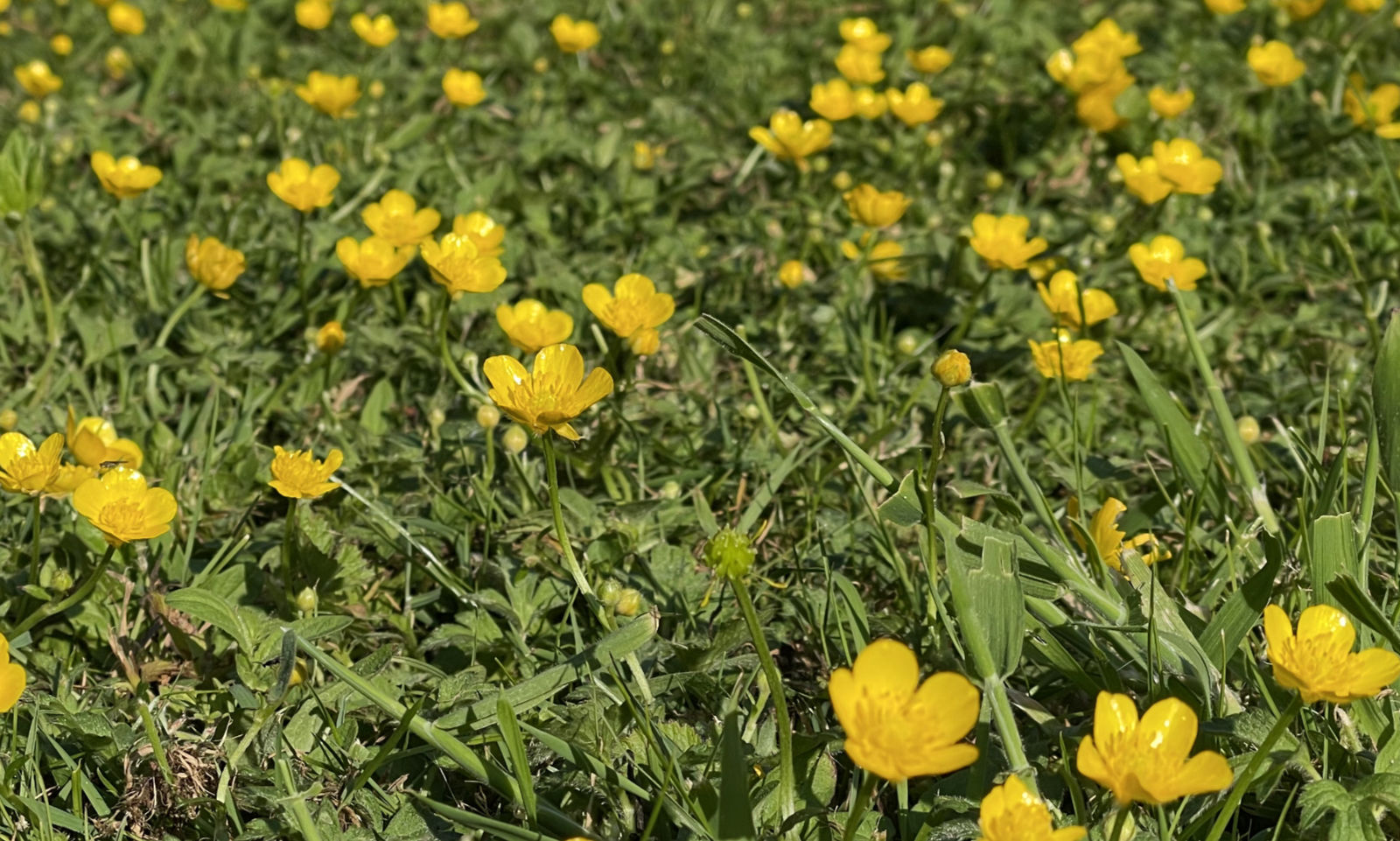
Buttercups, while seeming small and insignificant members of the wildflower community, actually play a valuable role in their ecosystems. They are fabulously successful and are found, in various forms, in most parts of the world.
Of course, they are best known by children as those little flowers that reflect a golden yellow light under your chin; but apparently only if you like butter. The golden yellow light is only possible because of the special reflective nature of the petals of the Buttercup which has a special structure making it more visible to pollinators. The glossiness of the petals fools pollinators into believing that the flower contains a pool of nectar. They may not contain a ‘pool’ of nectar but do actually contain nectar nonetheless and, combined with their large numbers, form a really important source of nectar and pollen for the ecosystem.
Buttercups provide a number of benefits to their environment including:
- Pollinator support
- Buttercups provide nectar and pollen to a variety of pollinators, including bees, flies, and beetles which are essential for the reproduction of many plants, including other wildflowers as well as the pollination of fruit trees (including apples). The bright yellow flowers of buttercups attract insects, such as hoverflies, which are natural predators of aphids and therefore help towards a healthier ecosystem.
- Early season food web contribution
- Buttercups bloom early in the spring and therefore provide an early and valuable food source for pollinators emerging from hibernation when other flowers may be scarce.
- Soil Health
- Buttercups act as a ground cover, helping to prevent soil erosion and nutrient runoff. The roots of Buttercups are able to break up compacted soil and will also improve drainage in the soil.
- Habitat provision
- Buttercups provide shelter and resources for a variety of small creatures, such as insects and spiders. Trying looking inside Buttercups and it will not take long to find one housing a tiny black beetle called a Pollen Beetle which love to hide among the petals.
- Aesthetic Value
- Buttercups add a bright splash of colour wherever they appear. They may also help relaxation by providing an answer to humans subconscious desire for randomness.
It’s important to note that buttercups contain a toxin called ranunculin, which can be irritating when ingested in large quantities although this toxicity usually doesn’t pose a significant threat in natural settings. The lesson is; don’t eat Buttercups!
Buttercups may not be as showy or specialised as some other wildflowers but they are still a valuable part of the ecosystem and play an role in pollinator and soil health.
It’s always best to leave a good amount of Buttercups intact when cutting the lawn; they are part of the enviornment for a very good reason.